You can’t elect your way out. The debasement [the government and central bank creating more money and credit, so each pound buys less] is the survival requirement of the system each new leader inherits, and a better person in the same seat inherits the same requirement.
A leader who does stop it triggers the crash the system has been expanding to avoid, takes the blame for it, and is replaced by someone promising rescue. That leaves two doors. Stop now and take a deflationary depression [a slump where prices and incomes fall but the debts fixed in pounds don’t, so defaults spread], or keep going and take widening inequality, rising control, and an eventual currency failure. Governments pick door two almost every time, because door one’s costs are immediate, visible, and land on whoever chose it, while door two’s costs are spread across millions of people and arrive after the chooser has left office.
Why we can’t just elect better people
A candidate who intends to stop it has to get past two filters, one on the system side and one on the voter side.
On the system side, most money is loaned into existence. A bank makes a loan, and new money appears. Those debts are nominal [fixed in pound terms, the amount owed doesn’t change when prices change]. Technology keeps making things cheaper to produce, so in an honest system prices would fall. But when prices and wages fall, the fixed debts take a bigger bite of every income, yours, your employer’s, the bank’s, the government’s. Enough of that and defaults cascade through the banks. So whoever sits in the seat faces the same choice on day one. Expand money and credit, or preside over cascading failure. Both the honest chancellor and the cynical one back expansion, because the requirement comes with the job. That’s what “incentives beat intent” means.
The funding side makes it worse. The promises politicians get elected on can’t be paid from taxes alone. The clearest numbers are American, and the mechanism is the same here. In 2019 total US corporate profits were about 2.25 trillion dollars, while money creation during the Covid years ran at roughly 5 trillion a year. Take every dollar of profit in tax and you still couldn’t cover what was simply created. Taxes still pay for much of what the state does. So a leader who gives up money creation has to either break the promises or raise visible taxes to levels no electorate will accept. Money creation is how the gap gets paid for.
On the voter side, politics selects for promises of more money because nearly all of us prefer the bigger number. Offer people a rise from £50,000 to £52,000, or a cut to £48,000 while their cost of living falls by more. The first offer wins, even though the second leaves them better off. So even a fully informed electorate keeps electing whoever promises expansion. The filter works on the candidate before they ever reach office.
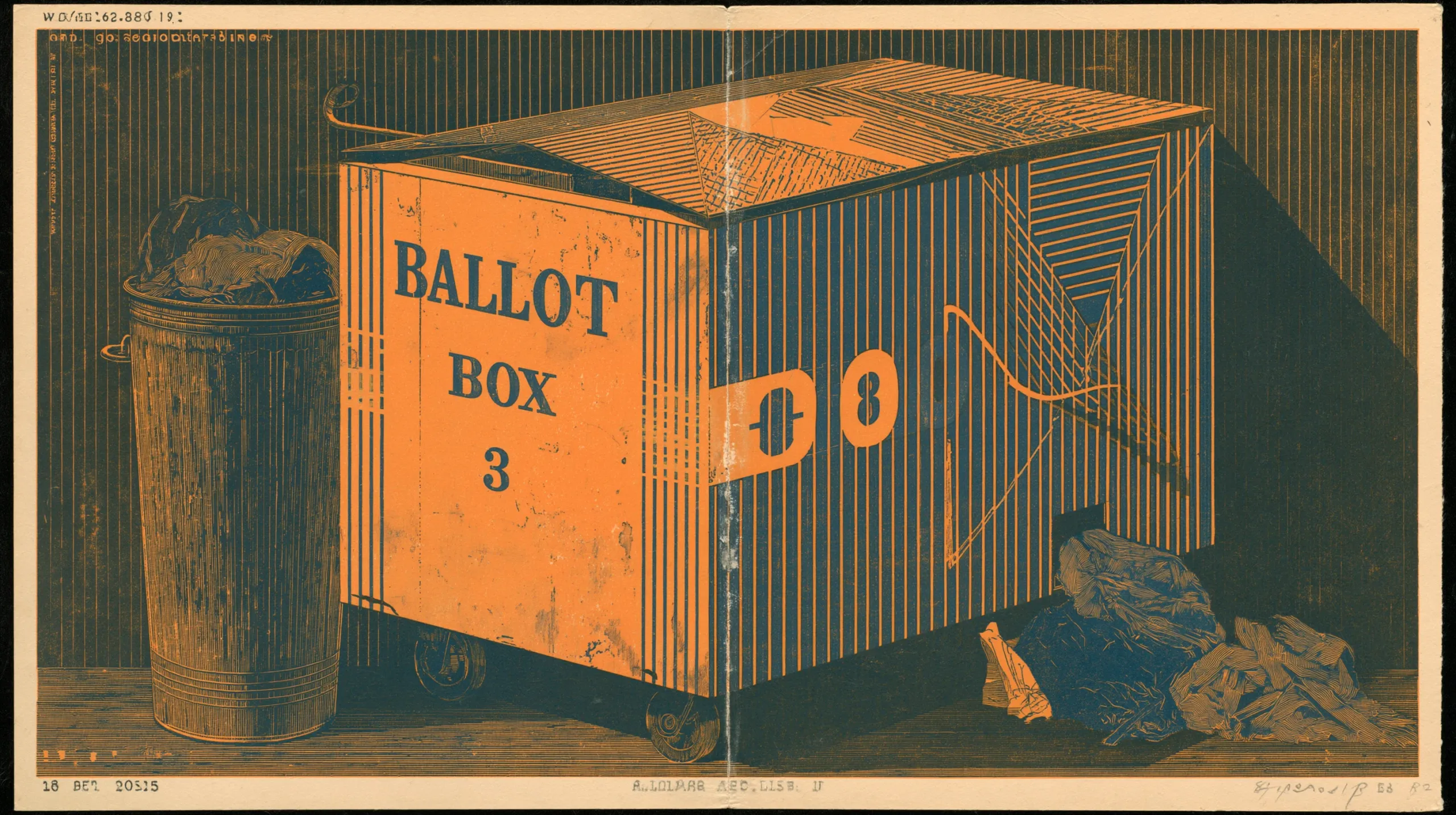
You’ve never had a vote on the money itself. Elections decide who spends. The unit has never been on your ballot paper. That’s why democracy without a vote on money is theatre. Changing governments changes who benefits from the expansion, not whether it happens. Changing the shop manager doesn’t help if the till miscounts the money. You fix the till, or you move to one that can’t be rigged.
What happens to the leader who stops it
Say a chancellor and a central bank governor announce the end together. They’ll create no more money, rescue no more banks, and let savers and borrowers set interest rates between them.
The announcement itself is the trigger. People holding assets priced on continuing support try to sell before it ends, because being early out of a falling market beats being late. Declaring you’ll never rescue the banks causes the bank run today, not someday.
Then rates rise toward the level savers and borrowers would set between them [what lending would actually cost, with no central bank buying to hold rates down]. A firm that borrowed at 3% refinances at 9% or not at all, so it cuts staff or fails. Mortgages reset and house prices fall. Falling prices and incomes hit fixed debts, defaults roll through the banks, unemployment spikes, and pension pots shrink as the bonds inside them fall.
Then the political bill arrives. The crash is immediate, certain, and has one address. The person who stopped. The benefits arrive years later and are invisible. Prices fall with technology, savings hold their value, savers and borrowers set interest rates, and nothing dramatic happens when life simply gets cheaper. People weigh immediate certain pain far above distant uncertain gain. So the leader who stopped loses to a candidate promising rescue, the rescue is the biggest expansion yet, and politicians watching learn never to try.
The trap has already shown up in miniature. Time after time, a hint at reducing support has been enough. Markets convulsed and the support came back. And the counterexample people reach for, Paul Volcker [the American central bank chief who pushed interest rates to nearly 20% around 1980 and broke that era’s inflation], can’t be repeated. Back then the debt was mostly private, owed by households and firms, so the pain landed on borrowers while the state stood behind the system. Today the state itself is the biggest debtor. Crushing rates now would blow up the government’s own interest bill, trigger losses across the banks, and force the next rescue. So the system chooses financial repression [holding interest rates below inflation so debts shrink while savers quietly pay] instead.
A system whose rules can be bent selects for people willing to bend them and removes the ones who won’t. That happens whether or not anyone means harm. Argue with the system, not the souls in it.
The two doors
Door one is to stop the expansion and let the market clear [let prices fall, with no support, until real buyers set them]. In a system where total debt is about three times what the world produces in a year, that’s a deflationary depression. Bank failures, mass bankruptcies, unemployment, savings inside the system wiped out by defaults. Deflation from productivity is the natural, healthy state of a free market. The bomb goes off when honest prices land on a mountain of fixed debts that were only ever payable if prices kept rising. The debt structure explodes, not the cheaper goods.
Door two is to keep going. And because technology’s downward push on prices is accelerating, the offsetting expansion has to accelerate too. Each crisis needs a bigger dose than the last, and each dose buys less. The consequences compound. Asset owners pull away from wage earners, savers get pushed into speculation just to stand still, trust decays, politics hardens into us versus them, and the state reaches for more control to hold the structure together. Financial surveillance, capital controls [rules stopping you moving your money out of the country or into certain assets], pressure on speech, and eventually programmable state money [money with rules built in about where, when and on what it can be spent]. Door two ends, historically, in a currency failure and a reset [the failing money replaced with a new one under new rules], sometimes through war. Weimar Germany is the standing example. Printing to meet obligations destroyed savings, desperate people reached for a strongman, and liberty went down with the currency.
Door two keeps winning because its costs are diffuse, delayed, and deniable. The debasement never sends a bill with its name on it. Nothing you can point at says “this is what took my pay rise”. Door one’s costs are concentrated, immediate, and attributable. So door one almost always loses, the dose grows, and the exit gets harder. Depression now versus repression later, and later wins vote after vote.
The exit was never either door. Both doors assume the same thing, that money must be somebody’s policy. The way out is at the base. A money nobody can expand. If the unit can’t be created at will, productivity shows up as falling prices for everyone, the hidden transfer from savers to borrowers stops, and governments have to fund themselves with taxes that citizens can see, contest, and refuse. What voters won’t fund, governments can’t promise. Accountability rises, because the stealth option is off the table. And it’s the first transition path that doesn’t run through collapse or conquest, because nobody has to win an election to take it. People opt out one at a time, and that’s why it can work where politics can’t. A vote changes nothing until a majority agrees, but leaving needs no majority and nobody’s permission. Each person who leaves puts their savings out of the debasement’s reach, so each round of expansion has less left to work on. It isn’t painless. No path from here is. But this is the one where faster take-up lowers the damage instead of raising the dose.
The argument isn’t that politics is useless. Politics can protect the exit. It can protect the right to hold your own keys [to control your savings yourself, with no bank in between]. It can write sane rules, and it can reduce harm at the margin. What it can’t do is fix the base from inside, because the seat itself carries the requirement to expand, whoever sits in it.
The case for trying anyway
“A gradual taper [winding the support down slowly] avoids the crash.”
With total debt at about three times what the world produces in a year, even a small withdrawal of support exposes fragile credit built on the earlier rounds. Taper attempts keep ending in reversal, and announcing the path is itself the event.
“Volcker proves a strong leader can do it.”
Covered above. The precondition no longer holds. Back then the debt was mostly private, owed by households and firms. Today the state itself is the biggest debtor.
“Once voters understand, democracy corrects it.”
The voter-side filter survives understanding, because the certain nominal rise still beats the abstract gain in what the money buys, and the unit isn’t on the ballot. Understanding changes what people do far more than how they vote. They exit, not to fix the system, but to stop their own savings paying for the expansion. The fix is what those exits add up to.